Fire and Glory: Blood War
- 4.6
- Rating
- 1.00M
- Installs
- Free
- Price

 Analysis by App-foxy
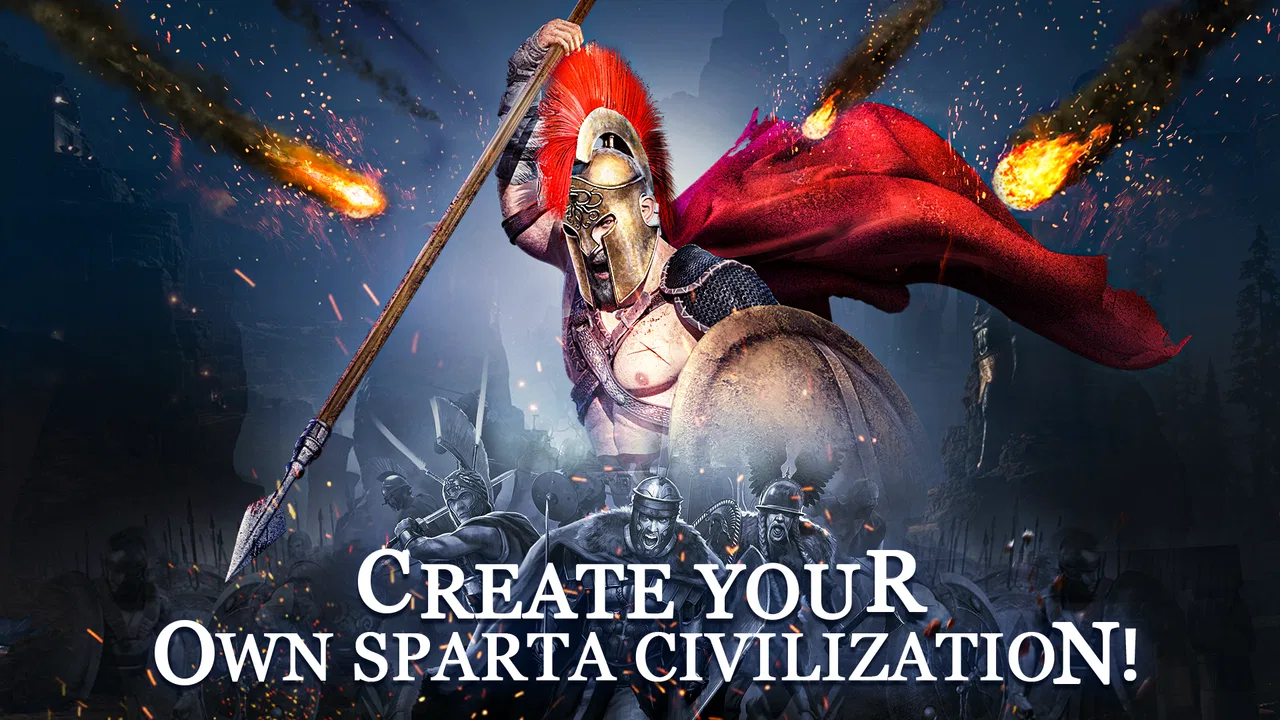
I spent time with Fire and Glory: Blood War as a strategy game built around the idea of ancient Spartan empires, and my first impression was that it is more comfortable as a shared conversation piece than as a completely private, pick-up-and-play distraction. The setting gives every decision a little more weight: I found myself thinking about expansion, timing, and whether a stronger move now would create a problem later. It is free to start, which makes it easy to try on an Android device, and the game is aimed at Everyone 10+, an important detail if it is going to sit on a household tablet or a phone used by several people.
KOOFEI has positioned the game in the strategy category rather than presenting it as a simple action title. That distinction matters. The appeal is not just the ancient-war atmosphere; it is the process of making plans, checking what is happening, and deciding how aggressively to proceed. I would recommend it to someone who enjoys games that invite discussion about choices, especially when two people in the same home like to compare approaches. I would not recommend it to anyone looking for a fully offline-feeling game that can be understood in a few seconds and abandoned without consequences.
How the game fits into a shared household
My most useful way to imagine Fire and Glory: Blood War is on a shared device during a short break at home. One person can make progress, then explain what happened to another player: why resources were saved, why an attack was delayed, or why a defensive choice seemed safer. That kind of handoff can make a strategy game more engaging, but it also creates a boundary that is easy to overlook. A shared device does not automatically mean a shared game identity.
You May Also Like

 Blood Strike: 2.5 Anniversary
Blood Strike’s Loadouts Turn Every Drop Into a Tactical Gamble
A close look at Blood Strike’s custom loadouts: how fast access to signature weapons reshapes its battle royale rhythm, rewards preparation, and narrows the gap between fights.

 Pandora - Music & Podcasts
Pandora’s Music Is Easy to Start, but Harder to Recover
Pandora’s strength is its low-effort path from a seed to a station. Its weak spot is how much confidence it asks you to place in connection, setup, and quiet recovery.

 8 Ball Pool
 Is Built on Rivalries, Rematches, and Routine
A close look at the rivalries, rematches, shared routines, and unanswered safety questions that turn a quick pool match into a persistent mobile community.

 Samsung Music
’s Quiet Strength Is Playing What You Already Own
Its reach comes less from spectacle than from dependable access to a personal library. That simplicity is both the app’s strongest retention engine and its ceiling.

 AccuWeather: Weather Radar
AccuWeather Review: A Quick, Clear Forecast for Everyday Decisions
For everyday plans, the best forecast is the one you can understand quickly. AccuWeather makes rain timing, radar, and local conditions easy to act on, with a few trade-offs.

 Hill Climb Racing
Why Hill Climb Racing Still Turns Crashes Into One More Run
A tiny car, a bumpy hill and one more upgrade: Hill Climb Racing keeps resurfacing because its simple chaos makes every near-miss feel personal.
More From Our News Desk



If several people want to play, I would decide before starting who owns the current game account or profile. Passing a phone around casually can work for looking at the screen, but it becomes confusing when different players make decisions in the same progression. A younger player may spend something that an older player was saving, while a parent may assume a child is only exploring. The game becomes much easier to enjoy when everyone knows whether they are observing, taking a turn, or managing the main progress.
This is especially relevant because the game includes optional purchases ranging from $0.99 to $99.99 per item. I would not treat a household device as ready for unsupervised use simply because the game itself is free to install. The sensible routine is straightforward: agree that purchases require permission, keep the device owner involved, and avoid handing over a logged-in game when nobody is watching. That is not a criticism unique to this title, but the purchase range makes the conversation worth having before a child starts tapping through menus.
For a family that enjoys discussing games, the strategic format works well. A parent can ask a child why a certain move was chosen without turning the session into a lesson, and an older sibling can explain the difference between acting immediately and preparing first. The game gives those conversations a concrete subject. On the other hand, if the household needs a game that multiple people can enter independently with no risk of mixing decisions, I would choose a title designed around separate local profiles instead.
Deciding who controls the progress
I found that the clearest arrangement is to give one person responsibility for long-term decisions while letting others comment or suggest moves. That may sound restrictive, but it prevents a common shared-device problem: several players remember the same session differently. Strategy games are less satisfying when nobody knows why the current position looks the way it does.
A second option is to create separate play routines, such as one person playing in the evening and another using a different device. I would only call the game genuinely shared when the people involved understand that their actions may affect the same ongoing experience. The important distinction is not whether the phone belongs to the family; it is whether the game progress belongs to one person or to everyone.
There is also a practical benefit to giving the main player a consistent role. That person learns the rhythm of the game instead of repeatedly restarting mentally. They can notice which decisions lead to pressure and which ones create breathing room. Other household members can still participate as advisers, but the game retains a coherent direction.
Learning the strategy without turning it into homework
The ancient Spartan theme gives Fire and Glory: Blood War a clear identity, but I would not install it expecting a detailed history lesson. I approached it as a fantasy strategy experience using that setting for atmosphere and motivation. The useful question is whether you enjoy planning within that world, not whether the game will replace a history book.
My advice for a first session is to resist the urge to make every decision at maximum speed. Strategy games often reward attention more than frantic tapping, and the Spartan framing encourages a bold style that can tempt a new player into overcommitting. I prefer to pause long enough to understand what the current screen is asking me to manage. That small habit makes the game easier to explain when someone else is watching.
One non-obvious advantage of playing on a shared device is that discussion can reveal mistakes early. A second person may notice that the main player is spending resources simply because an option is visible, rather than because it supports the larger plan. I found that asking “what are we saving for?” is more useful than asking whether a move looks powerful. It shifts attention from immediate excitement to a longer-term objective.
That approach also exposes one of the game’s likely friction points for casual players: strategy can feel slower than the action-oriented games people usually choose for a quick break. If your household expects every tap to produce an obvious reward, the pace may seem less satisfying. I think the game works better when a session has a small purpose, such as checking the state of the empire, making one careful adjustment, and stopping before decisions become rushed.
Useful habits for a first shared session
- Choose one decision-maker: let other players advise, but avoid several people tapping at once.
- Set a purchase rule: treat every in-app purchase as requiring the device owner’s approval.
- Explain the reason behind a move: this helps younger players understand strategy instead of copying taps.
- Stop at a natural point: a short, deliberate session is better than continuing after everyone loses track of the plan.
These habits are not official game systems, and they do not add controls that the game may not have. They are simply the way I would make a shared-device session less confusing. The game benefits from a little structure around it, particularly when the player is still learning what deserves attention.
Account boundaries, purchases, and trust
Before installing any free strategy game on a family phone, I think about three separate questions: who is playing, who owns the progress, and who is allowed to spend money. Fire and Glory: Blood War makes those questions practical because its free entry point can make the game feel harmless, while its optional items can still create a real household disagreement if expectations are unclear.
I would explain to a child that free installation does not mean every button inside the game is free. I would also avoid presenting purchases as a shortcut that must be used to enjoy the experience. The better arrangement is to let the player first understand the basic rhythm, then decide whether any optional spending is appropriate. This keeps the focus on the strategy rather than on the size of the purchase menu.
For adults sharing a device, the issue is less about age and more about account boundaries. If one person is using the game as their own long-term project, other household members should ask before changing anything. If the game is intentionally a group activity, everyone should accept that progress may reflect several different play styles. Neither arrangement is automatically better; the important part is that it is agreed upon.
I would also keep expectations realistic about privacy. A shared phone is not the same as a private gaming device. Someone who needs a completely separate account space, independent progress, and no possibility of another person opening the game should use a personal device or a platform that clearly supports separate profiles. Fire and Glory: Blood War can be part of a shared routine, but the household has to create the boundaries rather than assuming the device will create them.
The game is suitable for players aged 10 and above, so I see it as a reasonable option for older children when an adult is comfortable with the strategy theme and supervises spending. That age guidance does not remove the need for judgment. A child who understands the difference between playing and buying may be fine with a short independent session; a younger or less experienced player may need an adult nearby, especially during the first few uses.
What I would explain to a younger player
I would start with a simple rule: decisions affect the shared game, and purchases are never made without asking. Then I would encourage the child to describe the goal before tapping. This turns the session into a small planning exercise and gives the adult a chance to correct confusion without taking control away completely.
I would also make clear that losing momentum is not a personal failure. Strategy games can punish rushed choices, and frustration often leads to more tapping rather than better thinking. A calm explanation of what went wrong is more valuable than immediately trying to repair everything. This is one of the places where the game can work well as a cooperative household activity, even when only one person is holding the device.
Where it stands beside other strategy choices
Compared with a quick puzzle game, Fire and Glory: Blood War asks for more commitment. A puzzle usually gives you a self-contained problem, while this kind of empire-focused strategy experience encourages you to think about a sequence of decisions. That makes it more rewarding for players who like continuity, but less convenient for someone who wants a complete experience in two minutes.
Compared with a traditional board-game adaptation, the game is easier to keep on a phone and more natural for solo progress. A physical strategy game, however, makes player boundaries obvious: each person has a seat, pieces, and a turn. On a shared mobile device, those boundaries are informal, so the household must decide how to take turns and protect the main progress.
Compared with a purely competitive multiplayer game, the Spartan setting gives the experience a more focused atmosphere. I prefer it for a household where people want to discuss choices without necessarily competing face to face every minute. If your priority is direct competition with friends, a dedicated multiplayer title may be a better fit. If your priority is planning and building a personal strategy over time, this game has a stronger case.
The free price is another practical advantage for trying it, but I would judge it by your tolerance for optional spending rather than by the download cost alone. Players who dislike any in-app purchase structure may feel uncomfortable even if they never buy anything. Players who can ignore optional items and treat them as separate from the core session will find the entry barrier much lower.
Device expectations and everyday use
The game supports Android devices running version 6.0 or later, and its current version is 1.0.177. That makes checking compatibility simple before a household download, particularly if the shared tablet is older. I would still give the game a short test on the actual device rather than assuming that an operating-system match guarantees a perfect experience. Shared devices often have limited storage, crowded notifications, or several people competing for battery life.
In an ordinary evening scenario, I can see one person checking the game after dinner while another watches and asks questions. The first player might review the current position, explain a planned move, and leave the device for later rather than allowing everyone to make random changes. That is a better fit than trying to turn the title into a party game. Its strength is thoughtful coordination, not instant group chaos.
For travel, I would treat it as a strategy option for someone who enjoys returning to an ongoing game. I would not promise that it will suit every journey, because some players want a completely self-contained distraction with no need to remember previous decisions. The more you enjoy continuity and planning, the more likely the game is to earn a regular place on your device.
One practical tip is to keep the main player’s routine consistent. Playing at roughly the same time is not necessary, but having a clear reason to open the game helps prevent aimless sessions. For a shared household, that reason could be checking progress together. For a solo player, it could be making one deliberate strategic adjustment rather than simply opening the game whenever there is a spare minute.
My household verdict
After looking at the game as both a strategy experience and a shared-device choice, I think Fire and Glory: Blood War is best for households that enjoy talking through decisions. Its ancient Spartan atmosphere gives the sessions a recognizable identity, while the strategic format creates room for planning instead of mindless tapping. The strong store response, with an average rating of 4.6 from around 10K ratings and over 1M installs, suggests that it has reached a substantial audience, although popularity alone should not decide whether it suits your home.
I would recommend it to an adult strategy player, an older child playing with sensible supervision, or a family that wants one person to play while others advise. I would skip it for a household that needs independent profiles, a guaranteed interruption-free casual game, or a title with no purchase considerations. I would also avoid making it the default game for a child who is not ready to understand that free installation and optional spending are different things.
The developer, KOOFEI, has created a game that works most naturally when the player gives it attention. My best experience came from treating each session as a small planning window rather than a race to press every available option. That mindset also makes it easier to share the game responsibly: one person leads, everyone understands the boundaries, and no one confuses watching with permission to change the progress.
For me, the final recommendation is positive but specific. Fire and Glory: Blood War is a good household strategy game when trust and turn-taking are agreed in advance. It is free to try, has a clear age context, and offers enough strategic atmosphere to encourage real discussion. Just keep the account owner involved, set a firm rule around in-app purchases, and choose another option if your household needs completely separate play spaces.
FAQs for Fire and Glory: Blood War
01What is Fire and Glory: Blood War?
Fire and Glory: Blood War is a mobile strategy game that combines kingdom building, resource management, hero development, and real-time battles. Players expand their territory, train troops, research upgrades, and compete against other commanders. The game is designed around long-term progression, so success depends on planning, alliance cooperation, and choosing carefully when to attack, defend, or invest in development.
02Can Fire and Glory: Blood War be played for free?
Yes, Fire and Glory: Blood War can generally be downloaded and played without paying an upfront purchase price. However, it includes optional in-app purchases that may provide resources, speed-ups, premium currency, or progression advantages. Free players can still make progress, but development may take longer and competitive events can feel more demanding if you do not spend money. Check the store listing for current purchase details.
03Does the game require an internet connection?
An active internet connection is normally required to play Fire and Glory: Blood War because its main features depend on online servers. Kingdom events, alliance activities, player-versus-player battles, account synchronization, and live rewards cannot function properly offline. A stable Wi-Fi or mobile data connection is recommended, especially during battles or timed events, since interruptions may affect loading, commands, or battle results.
04Is Fire and Glory: Blood War suitable for beginners?
The game is accessible to beginners, but its many systems can feel overwhelming during the first hours. New players must learn how construction queues, troop types, heroes, research, resources, and alliances work together. The early tutorial helps, although experienced players may progress faster. Joining an active alliance, completing beginner missions, and saving premium items for important upgrades are useful ways to avoid common mistakes.
05What should I know about privacy, permissions, and in-app purchases?
Before installing Fire and Glory: Blood War, review the permissions and data-safety information shown on the Google Play Store or Apple App Store page. Online strategy games may process account, device, gameplay, and purchase-related information. Because optional purchases can accumulate quickly, parents should use purchase restrictions on shared devices. Also confirm that your account is properly linked so progress is not lost after reinstalling or changing devices.
Pros
- Fast-paced battles make short play sessions easy to enjoy.
- A wide selection of units encourages different army compositions.
- Hero abilities add strategy beyond simply upgrading troops.
- Guild features create opportunities for teamwork and shared rewards.
- The dark fantasy art style gives the game a distinctive atmosphere.
Cons
- Progress can feel slow without frequent upgrades or resource spending.
- Some battles rely heavily on power levels rather than tactical skill.
- The interface may feel crowded for new players at first.
- Online features require a stable connection to work properly.
- Repeated missions can become predictable after extended play.

Fire and Glory: Blood War
Gallery